
Articles / A Historic Minimum Wage Hike
A Historic Minimum Wage Hike
A pay bump for low-wage workers highlights deeper challenges in Nova Scotia’s economy, and raises tough questions about how to build lasting prosperity.
What happened on April 1, 2025?
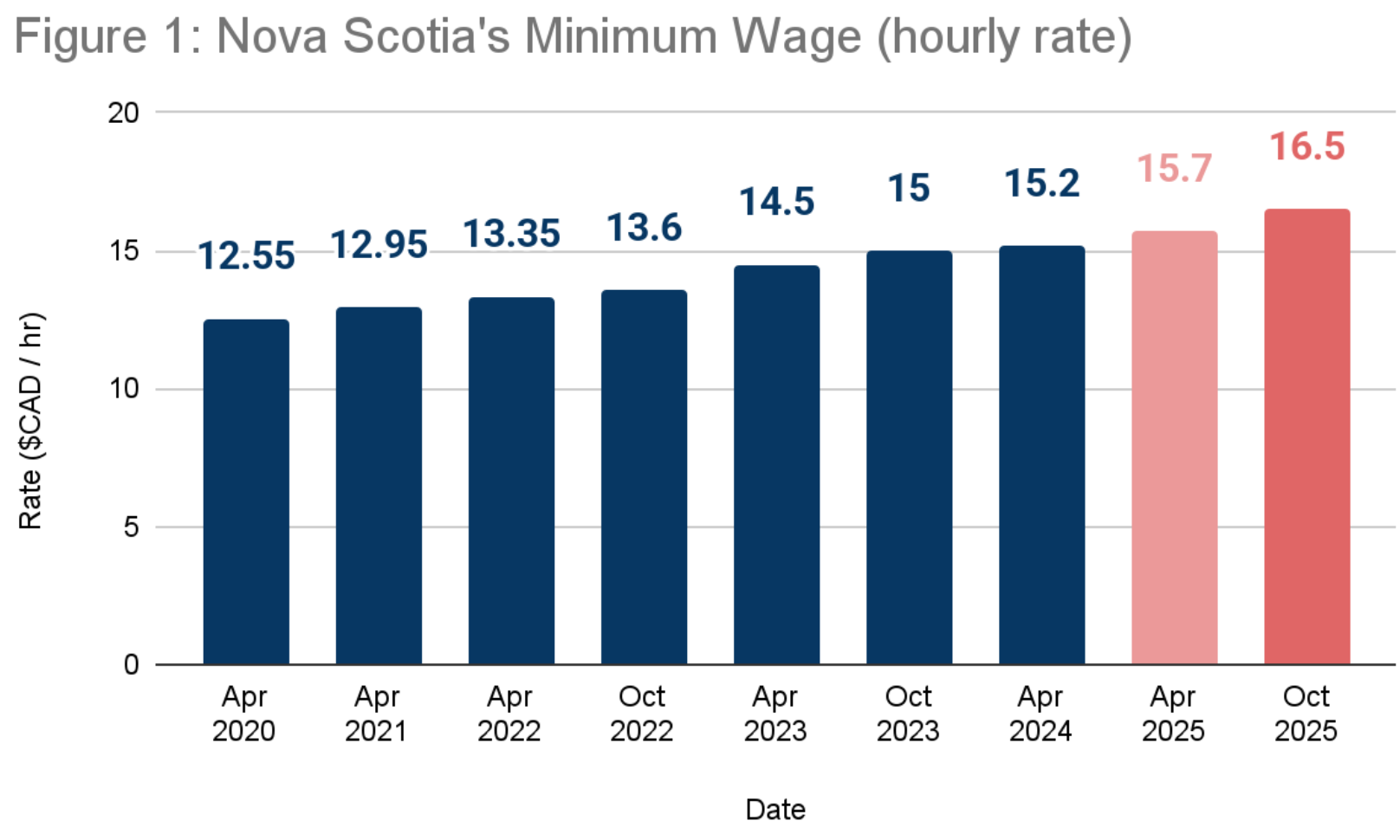
Nova Scotia increased their minimum wage by 3.29% to $15.70 per hour on April 1, 2025, and will increase it by 5.1% to $16.50 on October 1, 2025.
The increase is the inflation rate plus one per cent, and rounded to the nearest $0.05, as set by the Nova Scotia Minimum Wage Order. It will be effective on and after every April 1, beginning in 2025.
In the last five years, From April 2020 to October 2025, the minimum wage increase will have increased by 31.5%, from $12.55 to $16.5.
Figure 1 below, highlights Nova Scotia’s minimum wage increases since April 2020, to October 2025.
Do Minimum Wage Hikes Actually Help?
Looking at Canada’s economic history, we can assess how different governing styles have managed similar crises:
The Bank of Canada outlined some of the typical impacts associated with a sharp increase in minimum wages, spoiler alert, they are not as good as you think. The report suggests that the increase can reduce the levels of real gross domestic product (rGDP) and boost consumer price index (CPI) inflation.
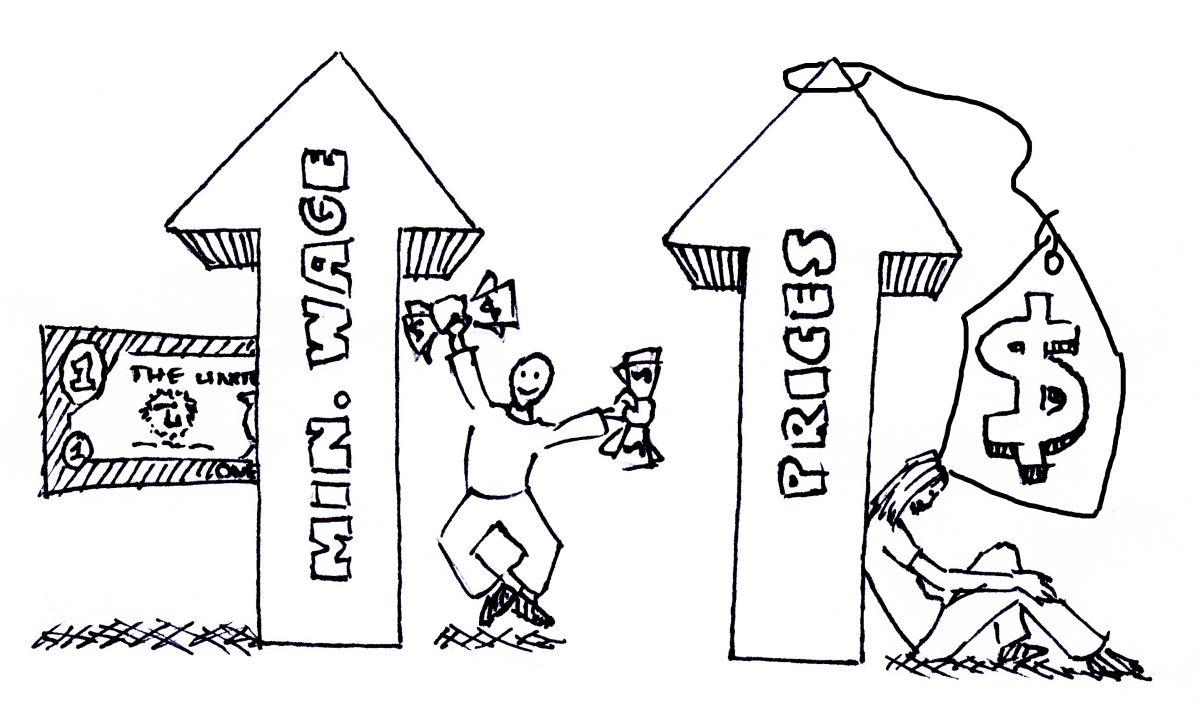
An increase in minimum wage can lead to higher real wages, which in theory sounds good, but it pushes up firms’ costs which are then transferred to the consumers in the short run.
How does this affect you? You pay more for what you want to buy.
Source: Redwoodbark
The possibility of rising costs can even offset the effects of a higher income taking us back to square one, and only creating employment challenges.
Another effect is reduced employment and weaker labour demand as businesses can’t afford to hire low wage workers. In Canada, the most affected by this are usually younger workers.
Frazer Institute, a Canadian think-tank, identifies that low-income households don’t usually benefit from wage hikes. The majority of people earning minimum wage in Canada belong to households earning higher incomes. In 2019, only 4.6% of full-time employees earned minimum wage.
This contradicts the initial argument that the wage hike will help lower income households, when in reality that is not the case. Most low-income people are usually unemployed or cannot get more than part-time jobs. A higher minimum wage may only make it harder for low-skilled workers to find a job.
Even if they do find a job, companies might react to the higher costs by limiting non-wage benefits like pensions, leave benefits, etc.
Although minimum wage is very important to help provide a decent living, it is not the only factor that is needed for this to happen.
Viewing an increase in the minimum wage in isolation, without considering external factors like health care, food security, safety, education, and access to employment, makes it difficult to see it as a comprehensive solution for improving the standard of living of Canadians
The ultimate goal of the government should be to create better conditions in the labour market so that most employees are earning more than the minimum wage.
What the Research Says
The Fraser Institute, believes that Nova Scotia’s minimum wage increase could have unintended negative consequences, ultimately hurting low-skilled workers.
When costs start to rise, in this case due to minimum wage increases, companies are put in a position where they have to focus on hiring more productive high-skilled workers rather than their lower-skilled counterparts.
Basically, when the cost of labour rises, companies use less of it, increasing joblessness. This puts pressure on inexperienced workers, those with severe disabilities, teens, and young adults.
Another negative effect is a potential decrease in workplace safety, and loss in employer-provided health benefits for some workers as companies look for ways to cut costs.
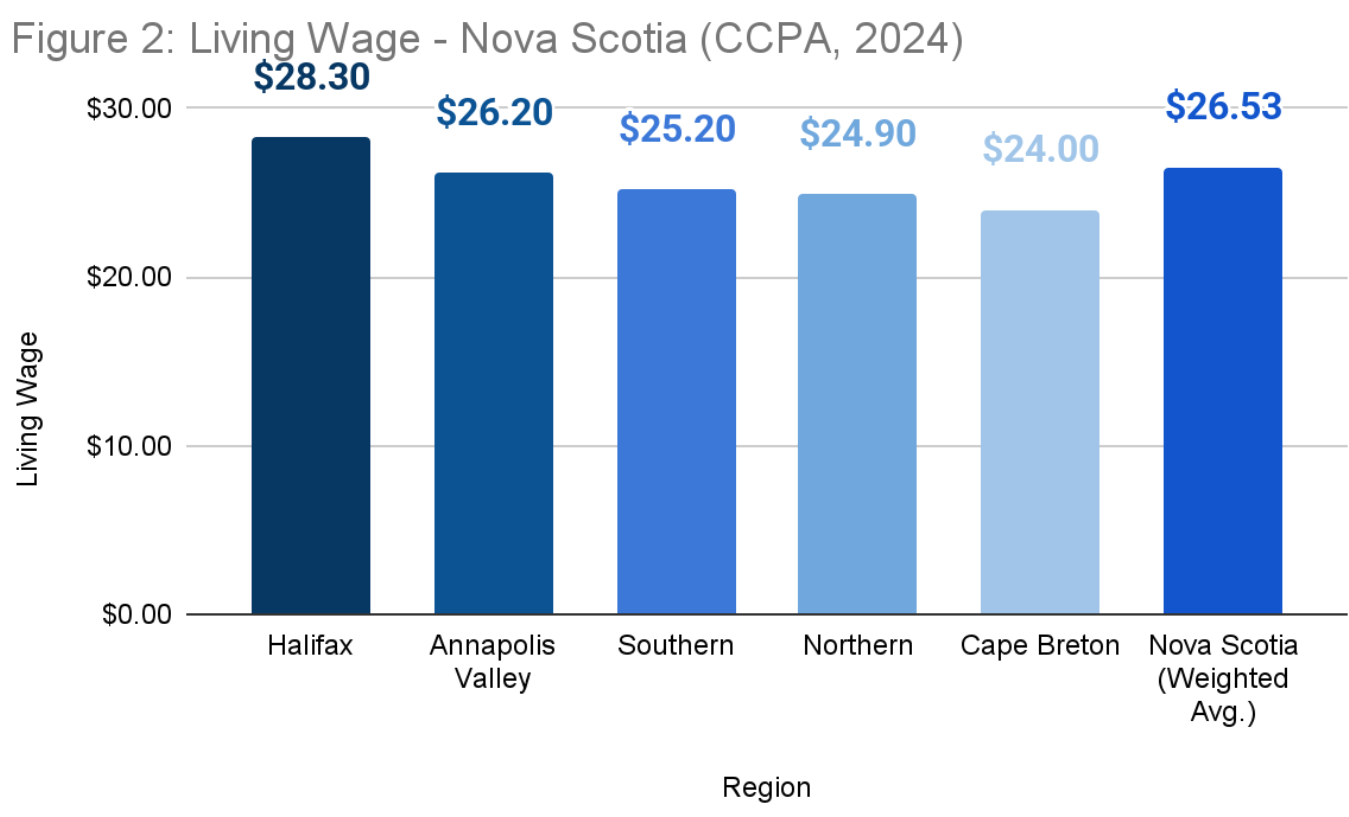
The Canadian Centre for Policy Alternatives (CCPA), a non-profit research institute, calculated that the average living wage needed to make ends meet in Nova Scotia was $26.53 in 2024. They point out that even with the minimum wage increasing, it doesn’t come close to bridging the gap needed for people to support themselves with minimum wage.
Figure 2 below shows living wages across Nova Scotia and the province’s weighted average.
CCPA even supports raising the minimum wage to $20 to bridge the gap. Although this sounds good on paper, in practice it can create many limitations like the ones we outlined before.
They ultimately added that making life more affordable also depends heavily on public investments in essentials like healthcare, housing, education, food, and transportation. Increasing the minimum wage isn’t a silver bullet, it’s more like a small band-aid for a much larger, systemic challenge.
Nova Scotia’s Productivity Challenge
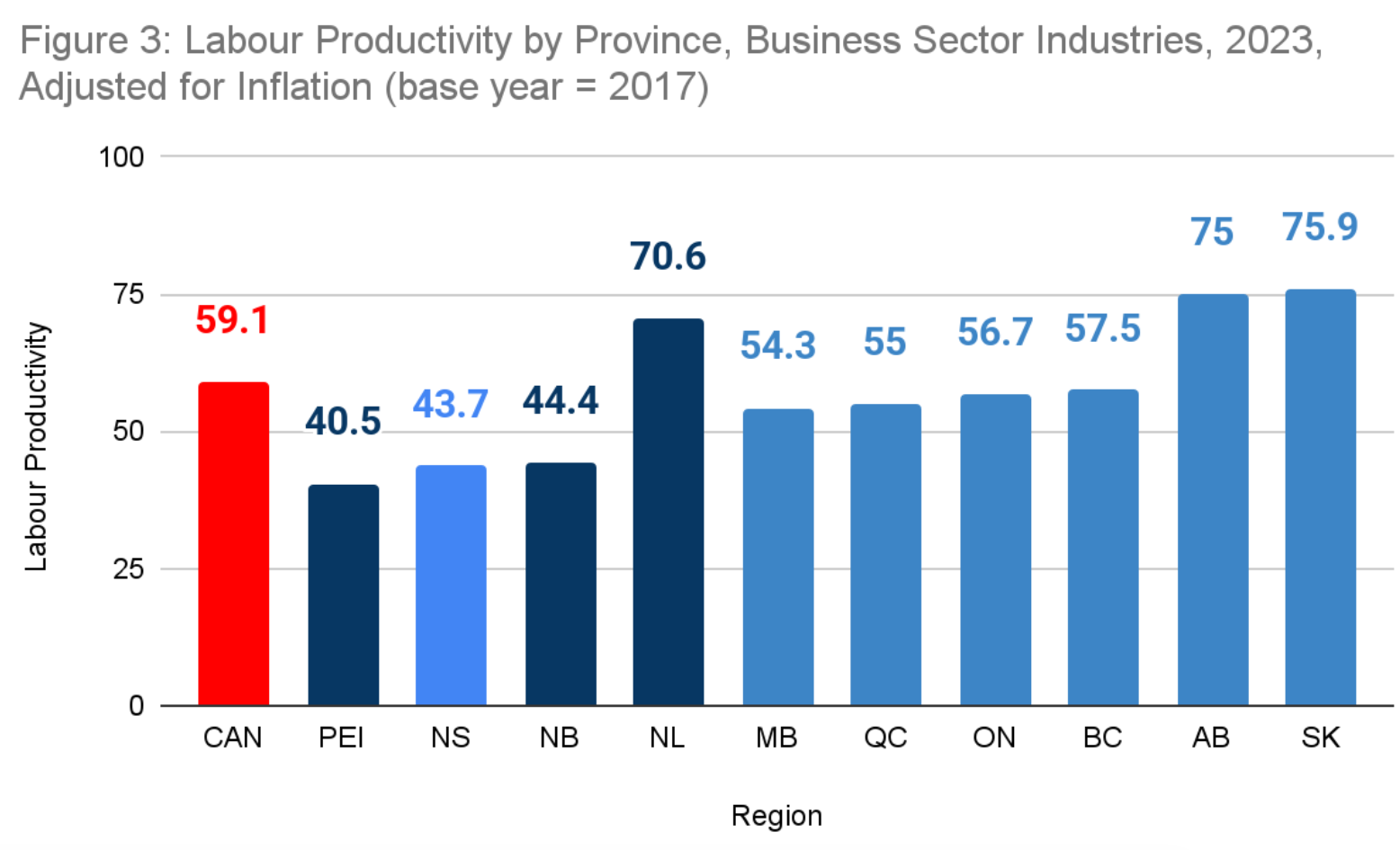
In 2023, Nova Scotia had the second lowest labour productivity in Canada, at $43.70. The province held the same spot since 2022 with productivity at $44.60. If you’re wondering what labour productivity is, it’s a measure that looks at the amount of goods and services produced by one hour of labour.
This is important because higher minimum wages, and higher wages in general, can limit a company’s ability to hire workers whose productivity falls below their wage level. Simply put, businesses can’t afford to hire someone if the value they bring in is less than what it costs to employ them.
There’s a possibility that this could hurt the province’s overall productivity, as higher wages may force businesses to reduce their use of labor. Even if the shift toward higher-skilled workers increases, the overall effect could still lead to a decline in productivity if total labor input decreases.
Figure 3 below, shows labour productivity across Canada in 2023.
Why the Restaurant Industry Is at Risk
According to Restaurants Canada, a not-profit trade association, the impacts of increased wages will have terrible consequences for the restaurant sector.
The restaurant industry contributes to about 4.7% of Nova Scotia’s GDP, and it is a critical contributor to tourism in the province. Despite that, 53% of restaurants are operating at a loss or just breaking even. This figure has been climbing up since pre-pandemic levels of around 12%.
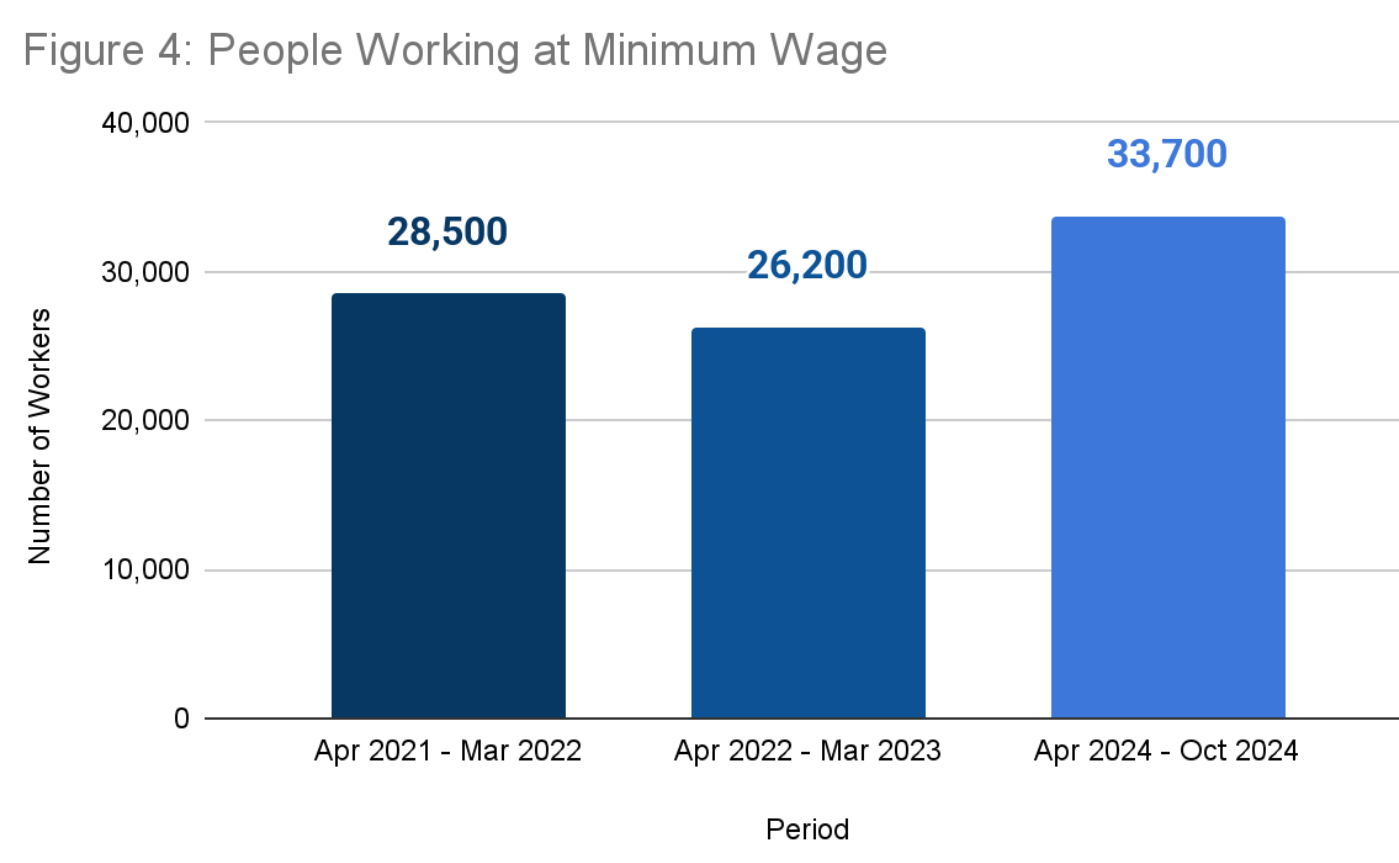
About 7.3% of workers in Nova Scotia, 33,700 people, worked for minimum wage during April 2024 to October 2024. A great percentage of these worked in the food, accommodation, and retail industries.
Figure 4 below shows the number of individuals from the workforce who worked minimum wage.
These individuals will be at risk of losing their jobs after the increase in wages creates higher costs to a sector that has been struggling.
The main challenge for restaurants in the province are higher costs. They have seen an increase of over 20% on their costs associated with insurance, food, utilities, and labour from 2023-25.
Although the goods and service tax (GST) pause over the holiday season was surely a breath of fresh air, and the reduction of the harmonized sales tax (HST) by one percent on April 1, 2025, from 15% to 14% is definitely a lifeline, it is not a definite solution to the restaurant sector’s cost problems.
The future holds uncertainty for the restaurant sector’s ability to lower costs, with tariffs, drastic immigration cuts, and minimum wage increases putting pressure on restaurants to increase wages for non-minimum wage staff.
How will these impact the average Nova Scotian? They will probably start noticing higher food menu prices, making affordability even worse in the region.
The Bigger Issue: Lack of High-Income Industries
For context, CCPA Nova Scotia identified that minimum wage workers in the province are mostly older than 20, and are full-time workers. Contrary to the common belief that they are mostly young people who can still get some support from their families.
In Nova Scotia, 35% of workers earn $20/hour or less, 85% of these workers are over the age of 20, 82% were not-students, and the majority were full time permanent workers.
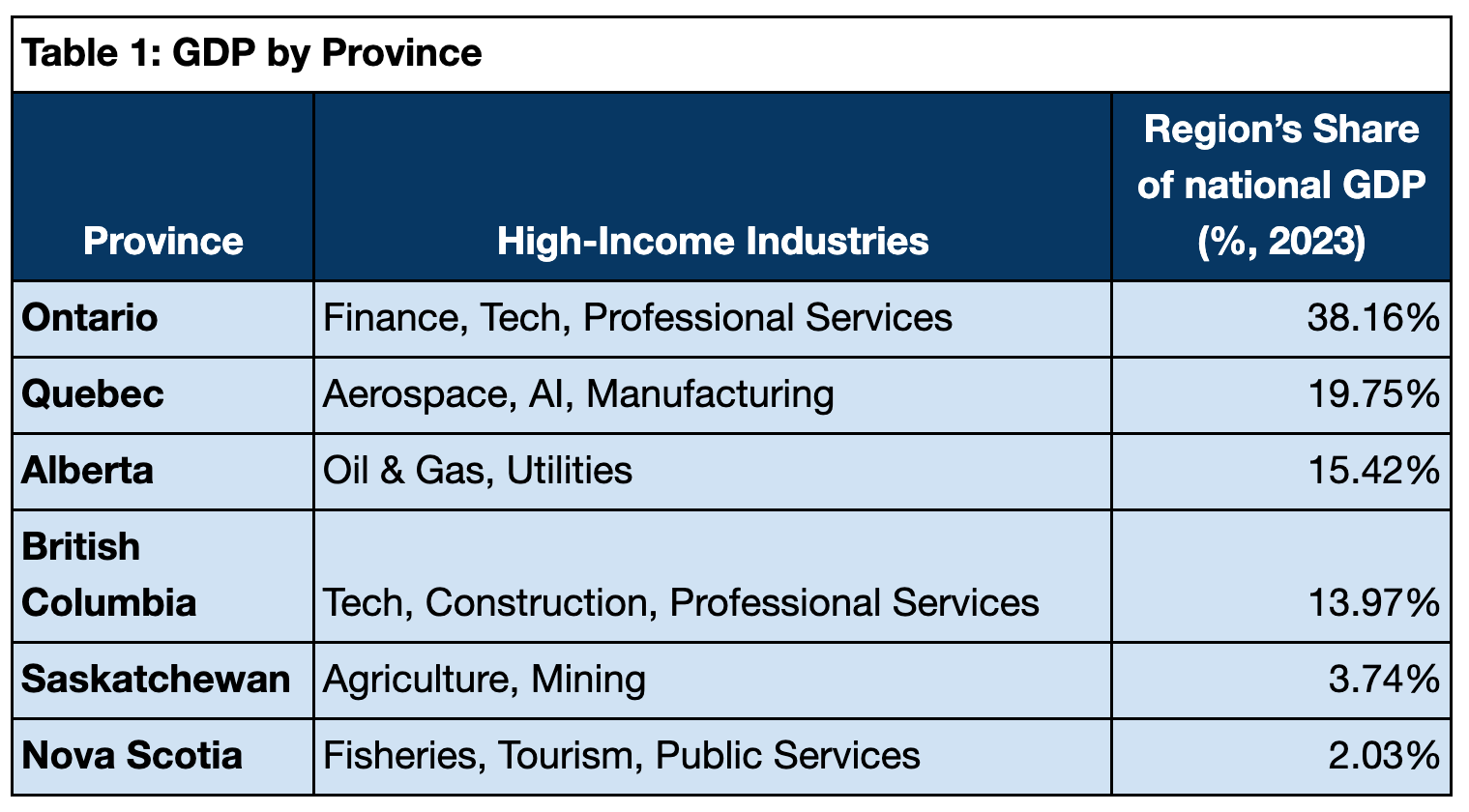
Table 1 below shows what are some of the high-income industries in a few select provinces, and the share of Canadian GDP each province represents.
Between all the noise, it is hard to see that the real question we should be asking is, why is it so hard for Nova Scotia to have high income industries for these young professionals?
The first red flag in the relationship between Nova Scotia’s government and their economy is that about 63% of it comes directly from government spending as of 2022. This was the highest level in Canada.
To put this in perspective, it is about double the size that other governments spent. Alberta with 26.8%, Saskatchewan 32.8% and British Columbia with 35.6% in the same period.
Research has shown that the optimum levels of government spending for developed countries is around 26-30% of their economy. Nova Scotia’s government is well over twice this range.
How can this be a bad thing? The government starts competing with businesses for the best talent which can limit their competitiveness. A large government can lead to more regulations which can favour or harm certain industries or sectors. Ultimately, it can discourage and limit business investment.
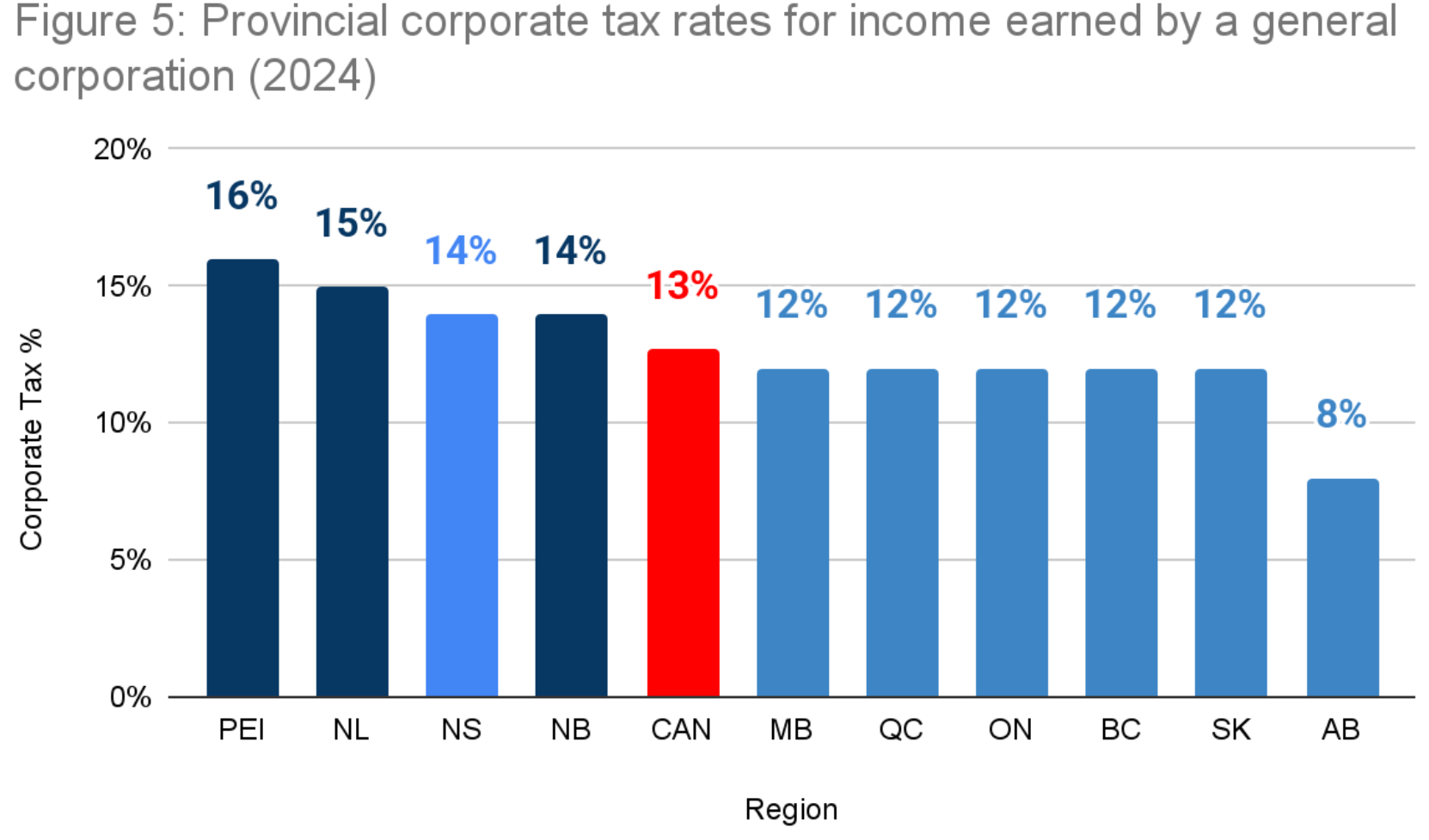
Higher regulation is seen by Nova Scotia having the 3rd highest provincial corporate tax rates in Canada at 14% as of 2024.
This makes the economy less productive because it is more expensive for businesses to operate, reducing their profits, limiting hiring of new workers, and expansion.
Over time, this can make companies want to take their businesses to other provinces with lower taxes and less regulation.
Figure 5 below shows the provincial corporate tax rates in Canada during 2024.
Source: Royal Bank of Canada (RBC), 2024
Despite growing their population by 3.2% in 2023, adding a little over one million people, the province has not been able to take full advantage of this influx of younger professionals to improve their economy and their living standards. This is a problem that is also faced by Canada as a whole.
Another challenge is having one of the oldest populations in Canada. This does not help with the productivity problem. The province will face challenges replacing these workers as they reach retirement ages.
From 2016-21 Nova Scotia’s share of population aged 65 or older increased by 17.1%, and represented 22.2% of total population. In 2016 this group was only 19.9% of the total population.
In conclusion, Nova Scotia has an opportunity to better support local businesses by reconsidering the size of its government and reducing excessive regulations on corporations. Doing so could help local companies become more competitive and productive, ultimately creating well-paying jobs for young professionals.
Raising the minimum wage alone is not the right solution unless it’s paired with policies that support both business sustainability and citizen well-being, such as investments in healthcare, education, and public safety.
So, What Can Policymakers Do?
Nova Scotia’s minimum wage increase is well-intentioned, but without a broader strategy, it risks creating more problems than it solves, especially for the very people it aims to help.
To make wage increases more effective and inclusive, policymakers can:
Promote High-Income Industry Development
Attract investment in industries like clean tech, professional services, and advanced manufacturing. This requires competitive corporate tax rates, reduced regulatory red tape, and clear pathways for business growth.Invest in Workforce Upskilling
Support training programs that help workers, especially youth and underrepresented groups, gain skills for higher-paying, in-demand jobs. Emphasize digital literacy, trades, artificial intelligence (AI), and entrepreneurship.Support Small and Medium-Sized Enterprises (SMEs)
Offer targeted relief (e.g., tax credits, subsidies) to small businesses in high-impact sectors like hospitality and retail that are struggling with rising costs. These businesses are vital to community economies but vulnerable to shocks like wage increases.Reassess Government Spending and Role in the Economy
Explore ways to reduce government over-dependence in the economy by streamlining operations and encouraging private sector leadership in innovation and job creation.Address Affordability Through Public Investment
Instead of relying solely on wage hikes, invest directly in essential services like affordable housing, childcare, transportation, healthcare, and education. These reduce cost-of-living pressures more effectively than wage increases alone.Modernize Economic Strategy
Develop a long-term economic vision that prioritizes productivity, innovation, and demographic resilience, especially considering Nova Scotia’s aging population.
Raising the minimum wage is a step, but not the solution. To truly improve living standards, Nova Scotia must tackle the root of the issue: a lack of high-paying industries and a policy environment that doesn’t fully support growth, innovation, or inclusion.
#MinimumWage #NovaScotiaEconomy #PublicPolicy #SmallBusinessSupport #LivingWage #LabourMarket #EconomicDevelopment #CostOfLiving #YouthEmployment #Productivity #RestaurantIndustry #AtlanticCanada
- admin



Let’s Drive Growth Together
Reach out to us for a free consultation with ASBB Consulting!